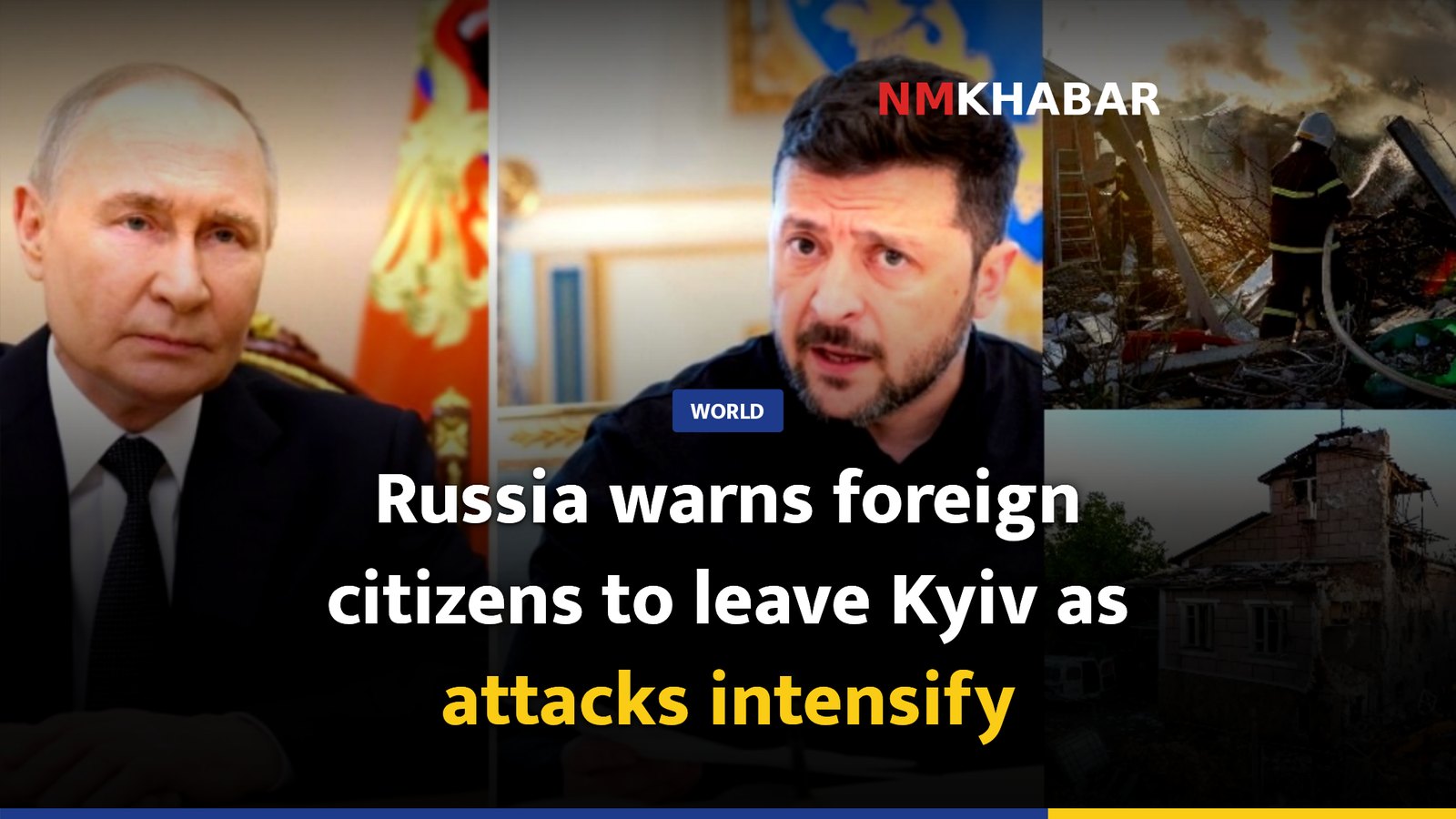
Russia has warned foreign citizens and diplomats to immediately leave Kyiv, stating it will continue intense attacks on military infrastructure across the Ukrainian capital and other cities. The Russian Foreign Ministry announced on Saturday that these actions are in response to what it calls “terrorist acts” by Ukrainian forces against Russian citizens and infrastructure.
Moscow also advised Kyiv residents to stay away from military and administrative centers. The ministry cautioned that individuals who disregard the warning would be solely responsible for any adverse consequences. This is not the first such warning; Russia previously issued similar advisories through a diplomatic note to foreign partners on May 25, 2026, and reiterated it during a briefing by Deputy Foreign Minister Mikhail Galuzin for diplomatic mission representatives on May 27, 2026.
Intensified attacks and infrastructure damage
Recent Russian attacks in Kyiv have resulted in at least six deaths. The Northern Bridge in Kyiv has been damaged, halting traffic, and three of the six road bridges over the Dnipro River connecting parts of Kyiv are now fully or partially closed due to two days of sustained assaults. Over the past week, Russian drone and missile strikes have continuously targeted energy, telecommunications, road, and rail infrastructure in Kyiv and surrounding areas. For the first time, Russia has also aimed at the east-west connecting bridges over the Dnipro River, Sauraha Online reported on October 4, 2026.
Kyiv Mayor Vitali Klitschko warned on October 3, 2026, as reported by Kantipur, that the capital must now enter a wartime state. Ukrainian officials reported that at least three people, including a child, died, and seven were injured in airstrikes in Kyiv and its vicinity on Wednesday morning, according to Bijshala.
Russia’s justification and international context
The Russian Foreign Ministry stated that its armed forces would continue “large-scale retaliatory attacks” in Kyiv and other Ukrainian cities. Russia claims these are a response to “terrorist acts” by Ukrainian forces targeting Russian citizens and infrastructure. Ukraine has intensified drone attacks on Russian oil and gas infrastructure, leading to fuel shortages in Russia, DD News Live reported on July 2, 2026, and Nepal Khabar on July 23, 2026. Russia also claimed that two MiG-29 fighter jets were destroyed in Ukrainian drone attacks, while Ukraine reported missile attacks on Russian military factories on October 2, 2026, according to Facebook. The full-scale Russia-Ukraine war began on February 24, 2022.
The Russian Foreign Ministry noted that many countries, including the United States, United Kingdom, European Union member states, Norway, and Switzerland, have repeatedly advised their citizens against traveling to Ukraine. Numerous foreign embassies operate in Kyiv, and foreign officials continue to visit Ukraine. Russia stated that those who ignore its latest warning are deliberately putting themselves at risk.
Uncertainty over peace talks
Ukrainian President Volodymyr Zelenskyy warned on October 4, 2026, that Ukraine would increase attacks on Russian oil refineries. He made it clear that Russia has shown no interest in peace talks or a ceasefire to halt attacks on energy infrastructure. Conversely, Russia has rejected Ukraine’s new proposal to de-escalate hostilities, declaring it would not abandon its military objective of fully capturing four Ukrainian regions, Ratopati reported.
The administration of US President Donald Trump is attempting to advance talks to end the war, with US envoys holding peace discussions in Moscow and Kyiv on September 6, 2026, according to Titopati. Russian President Vladimir Putin stated on May 11, 2026, as reported by Prashasan, that he is prepared to meet Ukrainian President Volodymyr Zelenskyy in a third country once all terms of a peace agreement are finalized, though there has been no clear response from the Ukrainian side regarding this.
Ukraine’s official response to the Russian warning remains unclear. Further information is not available regarding the steps taken by foreign embassies and officials in Kyiv following the warning. Additionally, more specific reactions from the international community to this latest warning have not yet been made public.