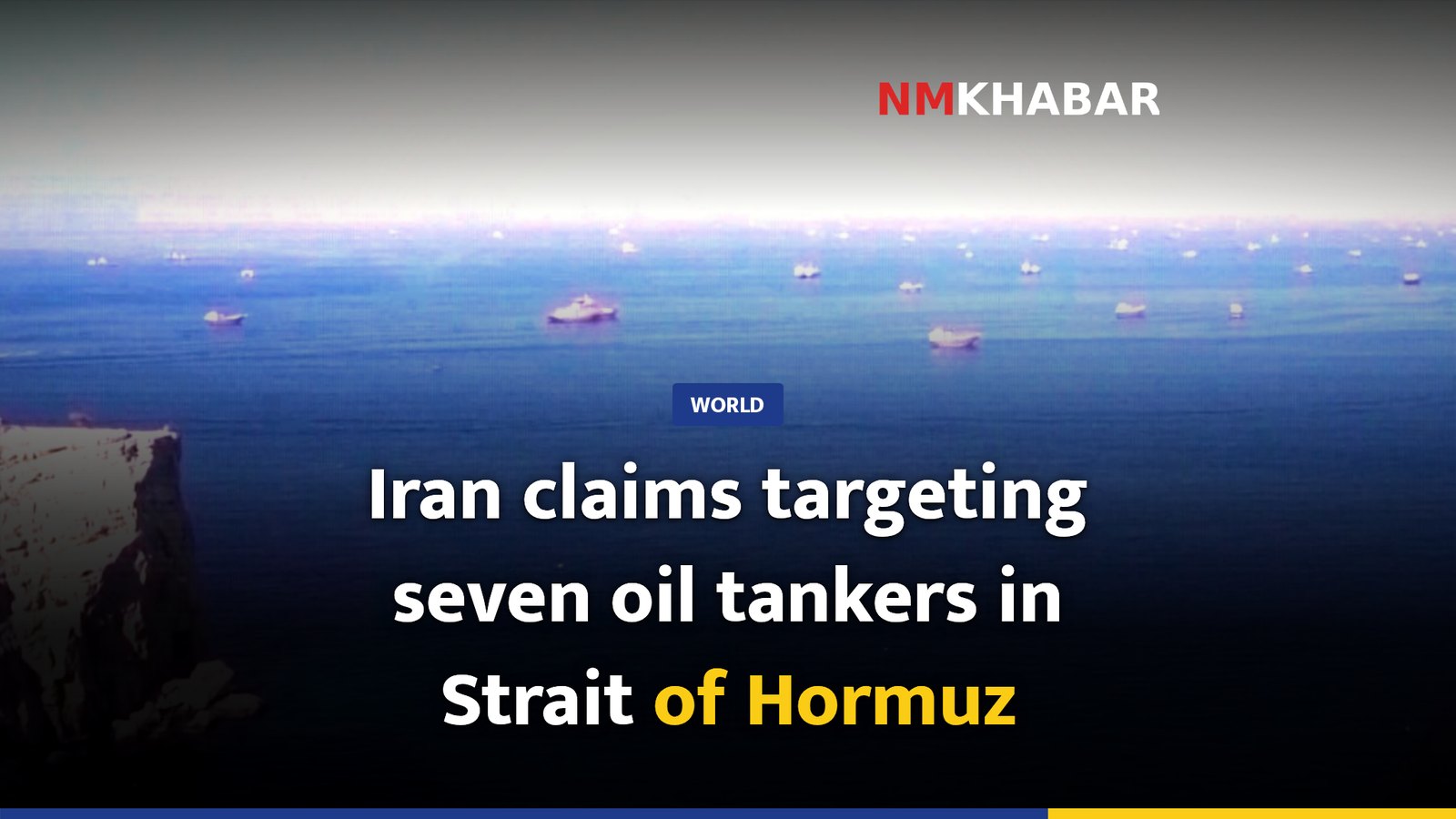
The Islamic Revolution Guard Corps (IRGC), Iran’s paramilitary force, has claimed its navy targeted at least seven oil tankers in the Strait of Hormuz over the past five days. This claim was reported by Iran’s semi-official Fars news agency.
Fars, citing independent military observer MenchOsinT, reported two oil tanker explosions in the waterway on Friday (October 2 or 3, 2026), one at the entry and another at the exit. The UK Maritime Trade Operations (UKMTO), a British naval agency, confirmed two oil tankers in the Strait of Hormuz area were struck by “unknown missiles” on Friday, reporting no casualties or environmental impact from these specific incidents.
According to security firm Vanguard Tech, the Kuwaiti-flagged VLCC *Kazimah III* caught fire on October 1, 2026, after an unknown missile strike in the Strait of Hormuz. All crew were safe, but environmental impact is unknown. Another Kuwait Oil Tanker Company VLCC, *Al Funtas*, was hit on September 28, 2026, with a fire brought under control. Three more tankers—*Mersin Prosperity*, *Sinbad*, and *Al Ruwais*—were reportedly attacked on September 29, 2026.
The Joint Maritime Information Center (JMIC) reports ongoing IRGC attacks, attempted attacks, and harassment, including UAV flights and targeted commercial vessel surveillance. This occurs as US President Donald Trump consistently asserts the Strait of Hormuz is open and under US control. The US Central Command claims successful reopening of the Strait, with thousands of ships and 1 billion barrels of oil transiting recently, despite Iran’s continued attacks.
Iran stated it tightened surveillance and control over the Strait of Hormuz since February 28, 2026, prohibiting safe passage for vessels linked with Israel and the United States. This followed a joint attack on Iranian territory.
Background to Regional Tensions
On February 28, 2026, Israel and the United States launched pre-emptive attacks, ‘Operation Roaring Lion’ (Israel) and ‘Operation Epic Fury’ (US), against Iran to dismantle its nuclear and ballistic missile programs. US President Donald Trump outlined war objectives including destroying Iran’s ballistic missile capability and preventing nuclear weapons. Reports also emerged of the death of Iran’s Supreme Leader Ayatollah Ali Khamenei.
Iran retaliated with drone and missile attacks targeting Israeli and US interests in Bahrain, Qatar, and the United Arab Emirates, escalating into a regional war. While a Pakistan-mediated ceasefire and a June Memorandum of Understanding halted large-scale fighting, both sides continue exchanging attacks over alleged violations.
What Happens Next
The UKMTO has begun investigating Friday’s oil tanker attacks. Risk to shipping in the Strait of Hormuz remains, as no agreement to end the war between the United States and Iran exists. US President Donald Trump has indicated a decision regarding Iran is being implemented.
Unanswered Questions
- Independent confirmation of the IRGC’s claim of targeting seven oil tankers.
- Full details of damage and environmental impact from Friday’s (October 2 or 3, 2026) explosions.
- Identification of those responsible for the attacks.
- Independent confirmation of the death of Iran’s Supreme Leader Ayatollah Ali Khamenei.